Three problems,
three proprietary technologies
Jamming, clogging, noise — the three most complained-about issues in the category. We answer each with a patented structure, and each answer comes with test data you can repeat.
Three industry problems,
three answers
Intelligent auto-reverse
Starts in reverse to clear residue; six millisecond-level torque boosts when jammed; if still blocked, it runs in reverse — with no mechanical wear and no sparking.
Scissor-type secondary cutting
After secondary grinding, long fibres are cut again into short segments — avoiding the blockages other brands run into when fibres pass through intact.
Patented noise treatment
A flexible waist joint absorbs vibration while X-cross shear reduces wasted grinding — cutting noise at both the source and the transmission path.
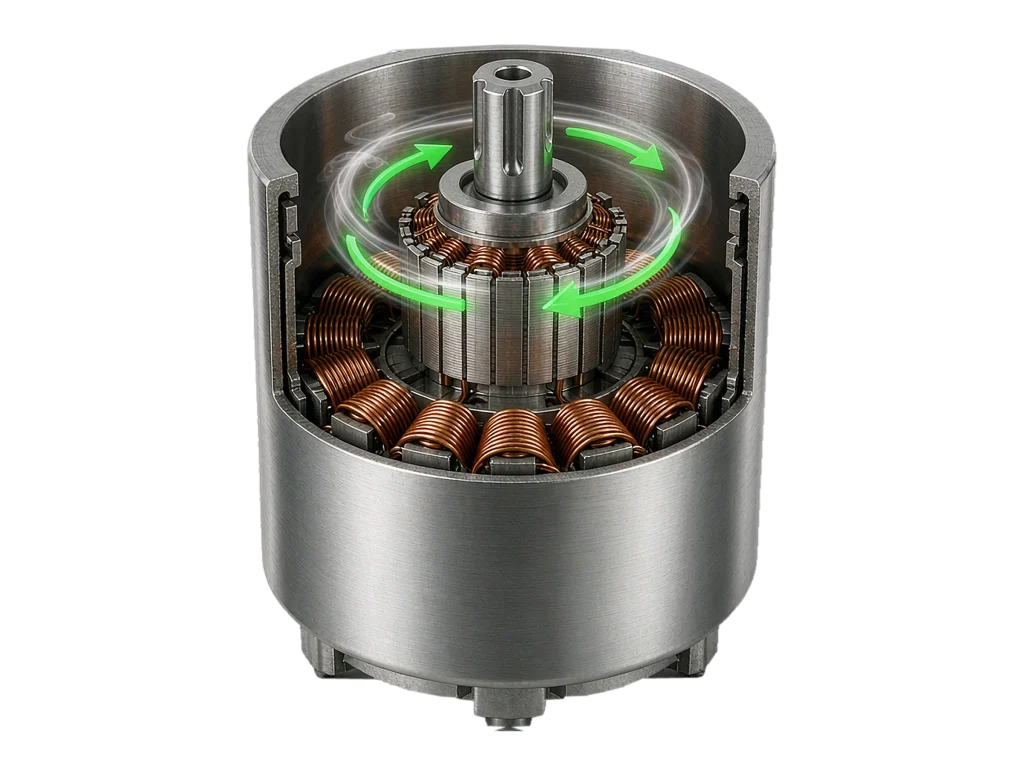
Intelligent auto-reverse, the anti-jam answer
Not by brute-forcing more torque, but by teaching the motor how to take a step back when it is stuck.
Each restart runs the motor in the opposite direction to the previous cycle, clearing residue out of the grinding chamber.
An electronic chip reverses the rotating field of the stator coils instead of reversing gears — no mechanical wear, no sparking, high safety and low motor wear.
The unit senses the load of the obstruction and applies up to six rapid torque boosts. If six are not enough, the motor automatically runs in reverse.
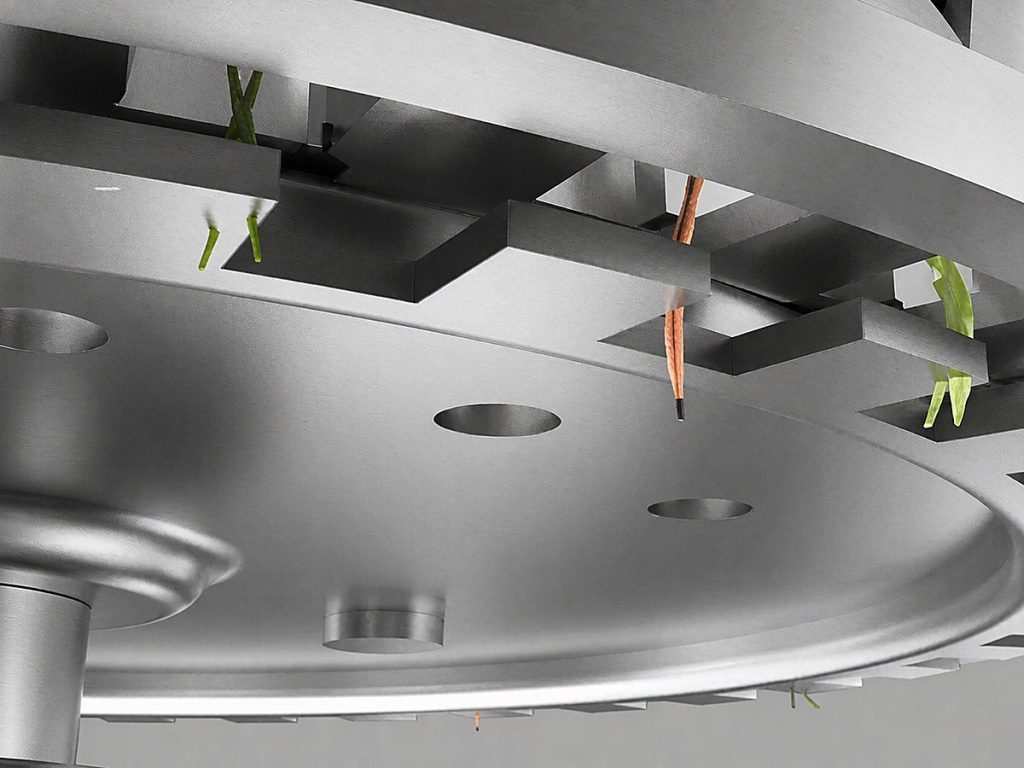
Secondary cutting, the anti-clog answer
A patented shearing plate cuts material again after secondary grinding, reducing long fibres to short segments — the case other brands cannot handle.
Invention patent ZL201610474705.6 · Utility models ZL201821338831.X · ZL201620643197.5| Food type | Conventional unit | Jiemei unit |
|---|---|---|
| Celery (60 s) | Fibres wrap around the plate and spin without progress | Finer fibres, no residue left in the chamber |
| Corn (30 s) | Sediment builds up and the drain blocks | Fine discharge, carried away by the water flow |
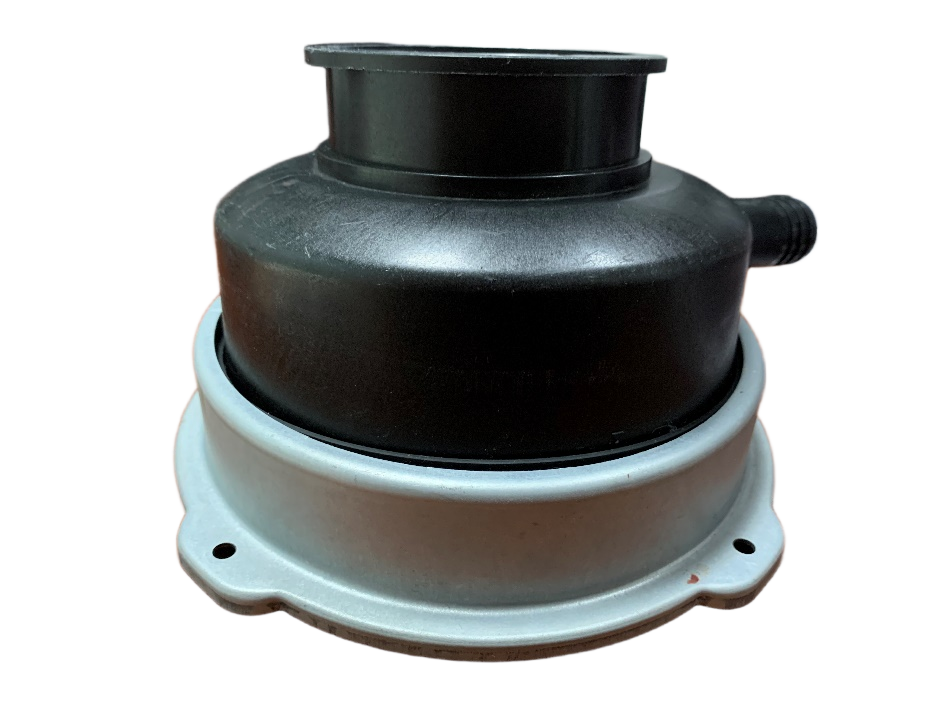
Patented noise treatment
Noise has two paths: the source and the transmission. We work on both — the cutter plate reduces wasted grinding, the flexible joint cuts vibration transfer.
Flexible waist joint
A rubber joint absorbs vibration, compensating for a sink and countertop that are not perfectly level. An off-vertical installation otherwise means loud running, countertop damage and a shorter machine life.
X-cross shear
Grinding efficiency rises: test data shows 50% less effective grinding time. The metal upper chamber resists overflow, cutting the defect rate by more than 75%.
Six unglamorous details
you use every day
None of these make it into advertising copy. All of them decide whether the machine still works in three years.
A stainless flange rated to 180 kg, for a stable installation that will not drop out of the sink.
The unit stops on overload or over-temperature and shuts down when jammed. After the problem is cleared, the motor lock must be released manually.
The water path is isolated from the motor and control board, preventing water ingress and burnt-out motors.
Shuts down after 15 minutes without operation, avoiding long idle running and extending service life.
Wireless remote plus air switch — two control options to suit different countertop drilling conditions.
A utility model patent. If a foreign object jams the plate, the user can insert the key into the base and turn it in reverse — no dismantling required.
AC or DC — how to choose
| Dimension | AC | DC |
|---|---|---|
| Typical speed | 1400–1600 rpm, constant output | 3500–4500 rpm, varies with load |
| Noise | Stable running, lower noise (<60 dB) | Brush and commutator sparking, higher noise (<65 dB) |
| Service life | Design life of 10 years or more | Limited by brushes: roughly 1–4 years |
| Cost | Slightly higher; for long-term and project use | Lower; for entry-level and light-duty use |
Want to test these numbers yourself?
We support sample testing and comparative trials — run a batch with your own food waste and see.